
🔥Johnny's Links #2🔥
NY BK courts, solar innovation, disrupted proxies, Sweetgreen Inc. ($SG) + more.
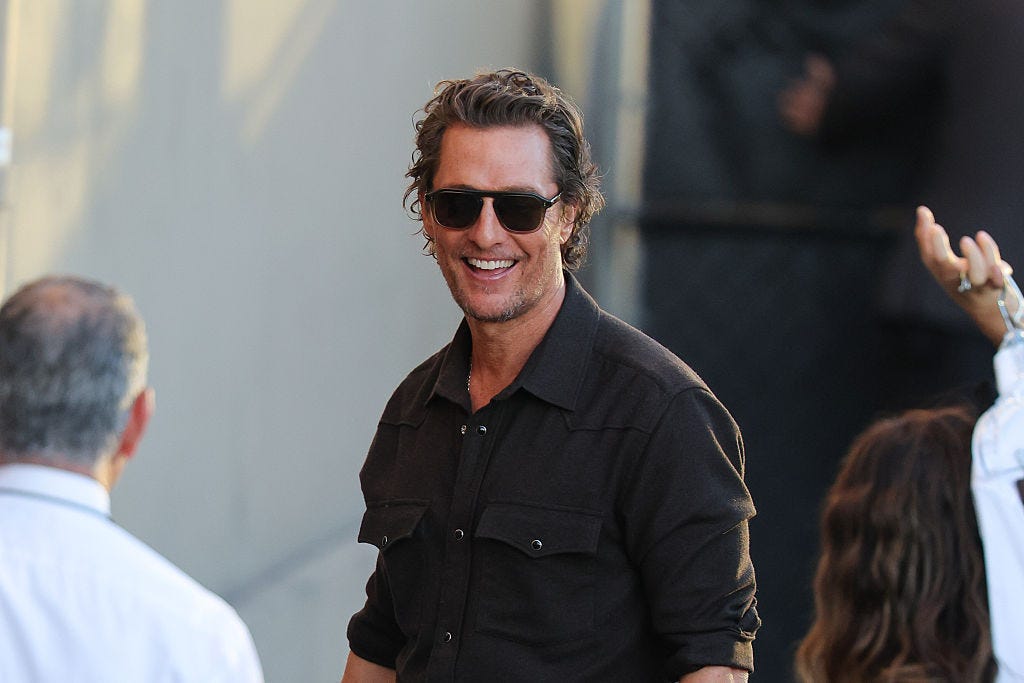
Alright alright alright nobody responded to last week’s first edition of “Johnny’s Links” with a visceral “f*ck you, Johnny” so here he is again with links that he found interesting this past week. Feel free to give Johnny some feedback or share a link of your own in Substack’s native comment section.
Be on the lookout for this Sunday’s a$$-kicking edition featuring, among other things, our coverage of Amazon Inc.’s ($AMZN) fave investment, Saks Global (😬). It will be for paying subscribers only so if you’re not currently one of those, you know 👇:
🔗What We’re Reading (8 Reads)🔗
1. AI (Short High Priced Lawyers). Here is well-known venture capitalist Fred Wilson writing about how he’s using AI to disintermediate lawyers at the investment stage, 😬. Something tells us there’s a whole bunch of liability lurking in here but what do we know, 🤷♀️? More to the point, AI is everywhere, everyone is playing with it, and we don’t care what anyone says, jobs will be lost. It’s getting so scary out there that people are taking extreme measures: indeed, Matthew McConaughey has trademarked himself!
2. Bank Innovation (Long Dimon-induced Disruption). Last week’s links …
… included a reference to bond innovation promoted by JPMorgan Chase & Co. ($JPM) and now JPM is at it again, spearheading an initiative to swipe left on proxy advisory firms. Per The Wall Street Journal:
“The [JPM asset management] unit, among the world’s largest investment firms with more than $7 trillion in client assets, has to vote shares in thousands of companies. This coming proxy season, it will start using an internal artificial-intelligence-powered platform it is calling Proxy IQ to assist on U.S. company votes, according to a memo seen by The Wall Street Journal.”
We like thinking about highly disruptive business decisions and how they may ultimately appear in a future First Day Declaration (“FDD”). Of course, we don’t have any reason to believe that proxy behemoths Glass Lewis and Institutional Shareholder Services will immediately descend into BK after this but it sure as sh*t won’t help business. If there is ever an FDD here, it can start with “Jamie Dimon f*cked us” in the section describing the circumstances that led to the filing.
3. Global RX (Long the Use of Foreign Jurisdictions?). A pair of professors discuss what looks primed — especially post Fossil — to be a growing trend.
4. GLP-1s (Long Evolution). The RX industry is no stranger to gym bankruptcies and so it stands to reason that there’ll be a lot of interest in how gym chains react to the fact that 1 out of every 8 Americans has already taken GLP-1s of one kind or another. Will GLP-1s disrupt gyms and lead to membership decline? Or will people glom on to the idea that exercise + diet = health optimization? It’s still too early to tell but gym owners recognize the danger and are proactively innovating.
5. Oil & Gas (Long Poland Spring). Call us crazy but … we don’t know …. this kinda sounds baaaad: “Swaths of the Permian appear to be on the verge of geological malfunction.”
6. Restaurants (Short Lunch Salad). If Sweetgreen Inc. ($SG) ever ends up in a bankruptcy court, we hope then-counsel plagiarizes from this cheeky and stinging piece about “How Sweetgreen Became Millennial Cringe” for the FDD. Some choice bits for the paywall-challenged:
“Although McDonald’s and its ilk got big by serving as broad an audience as possible, Sweetgreen derived much of its cachet from projecting a level of elitism. This, as it turns out, is not the secret to market dominance. Sweetgreen has always been relatively expensive, and it has gotten more so: In 2014, a kale Caesar with chicken was $8.85; this week, in some locations, it’s more than $14.75, which is almost $2 higher than can be explained by inflation alone.”
And…
“There’s also the issue that many Americans don’t like salad quite enough to actually want it regularly. In a 2024 YouGov poll, 40 percent of respondents said they ate salad more than once a week, which might seem like a lot until you remember that some of them were surely lying, and you consider how many more people prefer food that isn’t chopped-up raw vegetables: Last year, the nation’s top five quick-service restaurants were, in order, McDonald’s, Starbucks, Chick-fil-A, Taco Bell, and Wendy’s.”
The stock has gotten absolutely annihilated — down ~76% TTM as of January 15, 2026 — on the heals of some pretty f*cking piss poor operating performance (e.g., negative $36.2mm net income, declining revenue, worsening net profit margin, and two straight surprises to the downside versus analyst expectations). Maybe there’ll be a turnaround: there’s certainly a ton of executive talent on the Board of Directors but, let’s be honest, their salads do kinda suck, especially for that price, and pretty soon the company’s largest market — New York — will have government run grocery stores, 😉. In sum, f*ck Sweetgreen, we hope we see some plagiarism sometime in our very near future.
7. Solar (Long Transparency). It’s awfully hard to be optimistic about solar these days — not with the Trump administration in office and not after all of the solar-oriented chapter 11 bankruptcies we’ve all been witnessing over the past several years. But then there’s this:
“Researchers in South Korea have recently designed a transparent solar window technology that is capable of generating electricity continuously by using sunlight during the day and indoor lighting at night.”
Wait, what?
“The solar window maintains high transparency while delivering stable output regardless of time or weather conditions. It can generate power 24 hours a day using sunlight during the day and indoor lighting at night.
Unlike conventional transparent solar cells, which typically sacrifice efficiency for visibility, or distort incoming light, the novel system preserves both clarity and color accuracy.”
We’re by no means science geeks but, on its face, that sounds pretty damn cool.
8. Third Party Releases (Long Judge Lopez’s Marketing Skills). This “thought” piece by Benesch’s Mary Gilmore and Seth Kleinman is ostensibly about post-Purdue case treatment of third-party releases and, more specifically, the viability of opt-out provisions, but, in reality, it’s about forum shopping and how the Southern District of New York continues to detonate its own hand grenade and cede juicy chapter 11 action to the Southern District of Texas. The pertinent question here is this: is it kinda bullsh*t that someone can consent to a third-party release with silence? What do you think?
For additional reading on the topic, here is an alert put out by the fine folks at Cooley LLP.
📚Resources📚
We have compiled a list of a$$-kicking resources on the topics of restructuring, tech, finance, investing, and disruption. 💥You can find it here💥.


